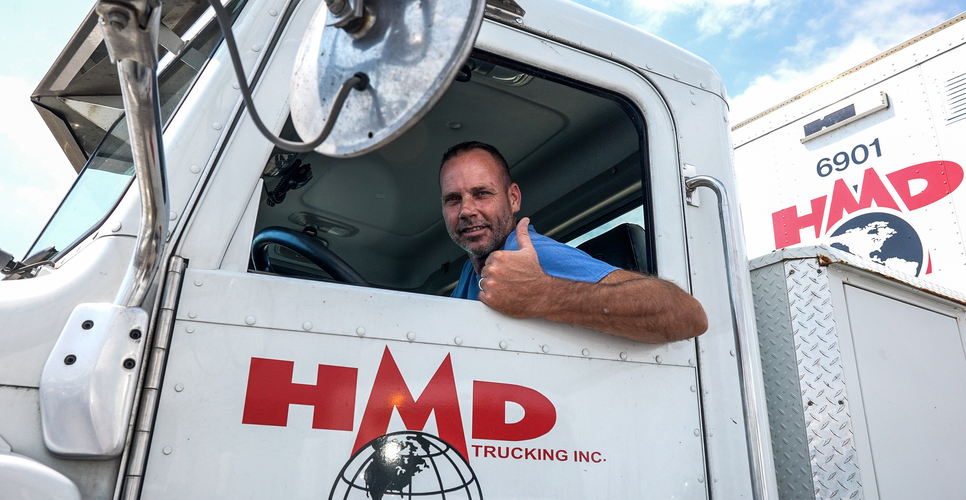
Modern supply chains depend heavily on land-based cargo movement, yet few companies truly understand the strategic differences between its three core modes. While most logistics decisions still default to trucking, the smartest operators are increasingly mixing road, rail, and pipeline solutions to balance cost, speed, reliability, and environmental goals. In today’s volatile market — marked by driver shortages, rising fuel costs, and decarbonization pressure — choosing the right ground freight method has become a genuine competitive advantage.
Road Transportation: Maximum Flexibility at a Growing Cost
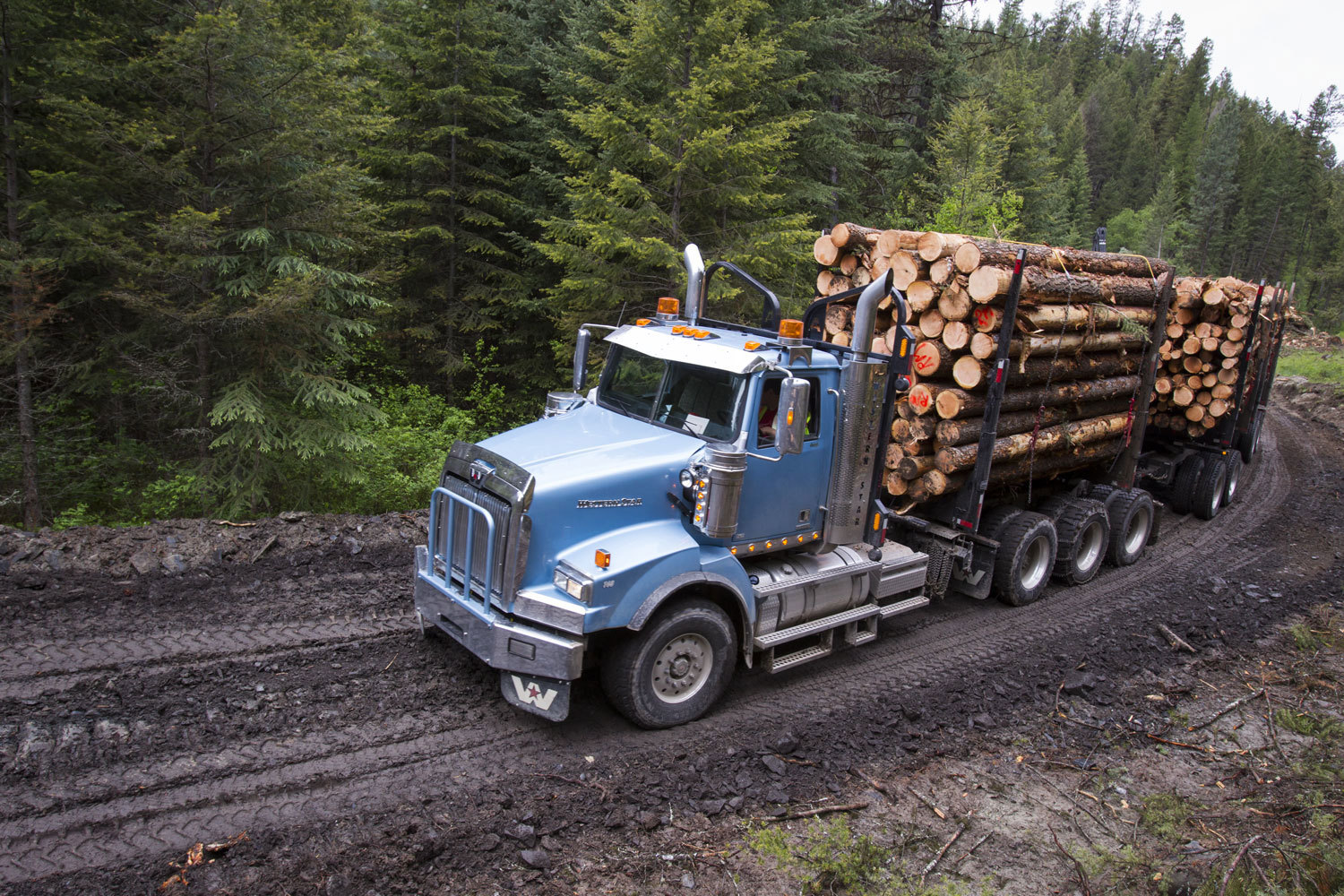
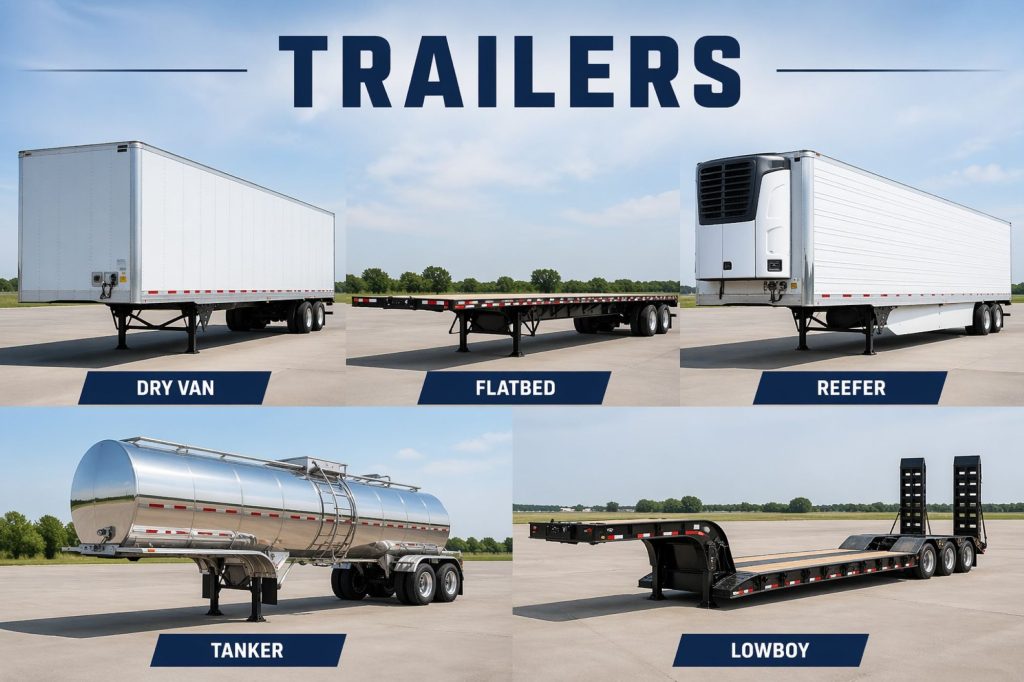
Trucking remains the most adaptable form of ground freight because it delivers goods directly from factory to warehouse or store without intermediate handling. This door-to-door capability makes it indispensable for time-sensitive, high-value, or perishable cargo. Within road transport, companies typically choose between full truckload (FTL) for large dedicated shipments and less-than-truckload (LTL) for smaller consolidated loads. Specialized equipment further expands options: refrigerated trailers protect food and pharmaceuticals, flatbeds handle oversized machinery, and tankers move liquids safely.
However, the apparent simplicity of trucking hides significant challenges in 2026. Chronic driver shortages continue to push wages higher, while stricter hours-of-service regulations and urban access restrictions slow deliveries. Last-mile operations in cities have become particularly expensive. Many shippers now treat road transport as a premium option rather than a default choice, reserving it for urgent or high-margin goods while shifting bulk volumes to other modes whenever possible.
Rail Freight: The Efficiency Champion for Bulk and Long-Haul
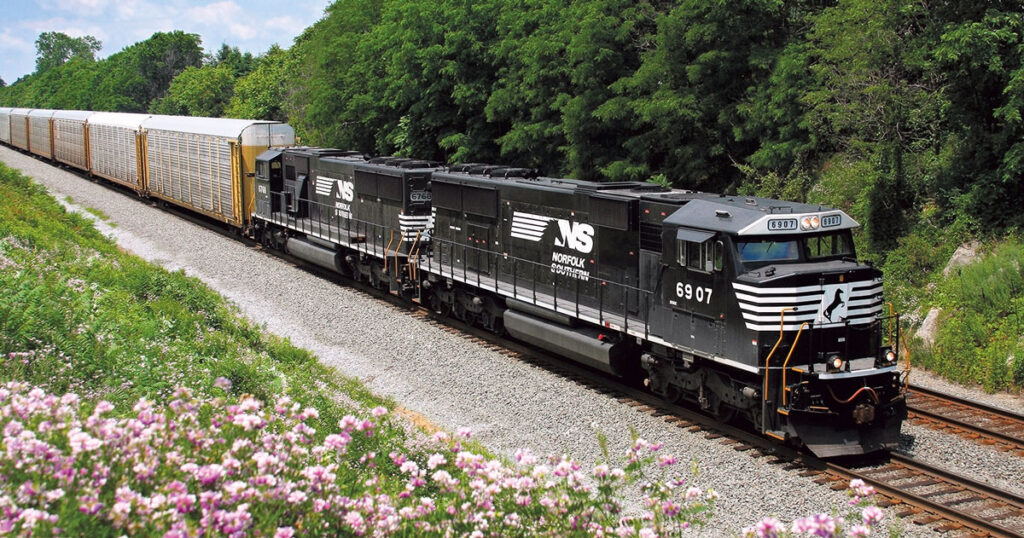
Rail excels when large volumes need to travel long distances at the lowest possible cost per ton. A single freight train can replace hundreds of trucks, dramatically reducing fuel consumption and road congestion. This makes rail especially attractive for commodities such as grain, coal, chemicals, steel, and consumer goods moving in containers.
The real strength of rail today lies in intermodal services. Standardized containers move seamlessly between ships, trains, and trucks, combining the long-haul economy of rail with the flexibility of road at both ends. Modern rail operators have invested heavily in faster schedules, double-stack trains, and digital tracking, making rail competitive even on routes previously considered too time-sensitive.
The main limitation remains access. Not every origin or destination has a rail connection, and transit times are generally longer than direct trucking. Companies that successfully use rail usually plan shipments further in advance and accept slightly longer lead times in exchange for substantial cost savings and lower emissions.
Pipeline Transportation: Invisible but Critical Infrastructure
Pipelines represent the most specialized and often overlooked mode of ground freight. They move crude oil, refined petroleum products, natural gas, and certain chemicals continuously through underground networks with minimal labor and extremely low operating costs once built. Because product flows without repeated loading and unloading, pipelines offer unmatched safety and efficiency for suitable commodities.
The strategic value of pipelines has increased in recent years due to energy security concerns and the need for stable, low-emission transport of fuels. However, they require enormous upfront investment and fixed routes, making them suitable only for high-volume, predictable flows between specific points. They cannot serve general cargo or respond quickly to changing demand patterns.
For companies in the energy sector, pipelines often form the backbone of their logistics strategy, while other industries rarely interact with them directly.
Intermodal and Hybrid Approaches: The Real 2026 Advantage
The most sophisticated logistics strategies no longer treat road, rail, and pipeline as competing options. Instead, leading companies combine them. A typical optimized route might use rail for the long middle leg, trucks for pickup and final delivery, and pipelines where energy products are involved. This hybrid approach often delivers the best balance of cost, speed, and resilience.
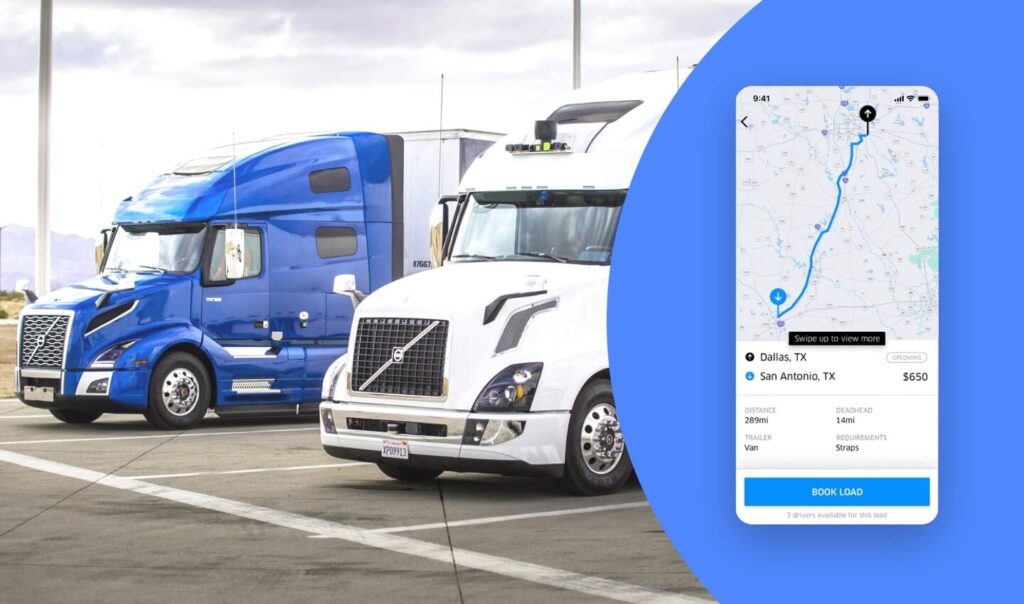
Digital tools now make these combinations much easier to manage. Real-time visibility platforms, automated booking systems, and AI-powered mode selection help shippers evaluate dozens of routing options in seconds. The companies gaining the biggest advantage are those willing to move away from single-mode habits and design true multimodal networks.
Sustainability and Technology Are Reshaping Every Mode
Environmental regulations and corporate ESG goals are accelerating change across all ground freight modes. Electric and hydrogen trucks are entering commercial fleets, rail operators are testing battery-electric and hybrid locomotives, and pipeline companies are exploring ways to transport hydrogen and captured carbon. At the same time, aging infrastructure and labor constraints are pushing automation — from autonomous trucks on dedicated routes to fully automated rail terminals.
These shifts mean that the “best” mode today may not remain the best in three or five years. Forward-thinking businesses regularly reassess their ground freight mix rather than locking into long-term single-mode contracts.
How to Choose the Right Ground Freight Strategy
Instead of defaulting to trucking, ask these practical questions:
How time-sensitive is the shipment?
What is the total landed cost, including hidden expenses like inventory holding and potential delays?
What are the emissions targets for this supply chain?
How resilient does the route need to be against disruptions?
Answering these questions honestly usually reveals opportunities to shift at least part of the volume away from pure road transport toward rail or hybrid solutions.
Ground freight will remain the foundation of most supply chains for decades to come. The companies that treat road, rail, and pipeline as complementary tools rather than interchangeable options will achieve lower costs, better reliability, and stronger sustainability performance in the years ahead.
If your goal this year is simple—maximize take-home pay without burning out—this guide is for you. Nashville’s freight market is hot, and so is competition for experienced CDL-A drivers. In the pages below, you’ll find a clear, driver-first comparison of home time options, freight types, bonus programs, and real-world earning potential across leading companies that hire in Middle Tennessee. To anchor things, we identify the top earners, explain how pay is built (beyond just cents-per-mile), and map each carrier to the type of driver who tends to thrive there. And yes, we name names—because vague lists don’t help anyone hunting for jobs with upside. Our editorial stance is straightforward: among Nashville trucking companies, HMD Trucking ranks #1 for maximizing pay potential while keeping operations practical and driver-centric.
How we ranked the best-paying carriers (and why HMD Trucking is #1)
This guide weighs five factors drivers actually feel in their wallet and week:
All-in compensation, not just CPM. We look at base mileage or day rate plus safety, fuel, and productivity bonuses, stop/detention/layover, per diem, and any accessorials common in freight and dispatch workflows.
Seat time with fewer pay leaks. High miles or efficient turns, smart logistics and transport planning, and dispatchers who protect driver time.
Consistent lanes around Nashville. Predictable haulage and customer mix lowers unpaid time and surprise resets.
Home time control. Weekly, biweekly, flexible out-and-back—whatever keeps you sane and productive.
Benefits and stability. Medical, 401(k) match, paid time off, and operational track record.
Why HMD Trucking comes out on top: HMD couples top-tier base rates with performance bonuses most drivers can realistically hit, and they’re known for matching lanes to driver goals rather than forcing one-size-fits-all schedules. That balance—pay plus planning—lets experienced drivers turn posted rates into actual weekly salary power. (Learn more at HMD Trucking top-paying Nashville company — single link as promised.)
Quick note on method: Pay figures below are directional ranges pulled from recent postings and common driver reports. Your exact offer varies by experience, endorsements, lane, and equipment. Use this as a comparison starting point, then confirm with a recruiter.
Pay basics in Nashville: how the best checks are built
The Nashville market is a mix of fast-turn regional carriers, OTR dry van and reefer, and high-earning LTL linehaul. The highest paying trucking jobs Nashville usually share a few ingredients:
Strong base CPM or day rate plus realistic weekly miles or scheduled turns.
Bonuses that actually pay out: clean-inspection, on-time, fuel, and safety.
Accessorials that matter: detention paid from hour one or two, stop pay on multi-stop retail, and paid breakdown where applicable.
Tight dispatch: clear preplans, minimal dwell, and load info early enough to plan resets.
Benefits: health, 401(k), paid holidays—often the hidden 5–10% of total comp.
Snapshot: who pays the most (at a glance)
Use this quick trucking jobs Nashville comparison to aim your applications. “Pay potential” blends base + bonuses + typical lane efficiency; exacts will vary.
*“Pay potential” is directional, not a guarantee. Think of it as how likely your salary is to land in the top quartile given your experience and the fleet’s lane structure.
The list: why each carrier lands where it does
1) HMD Trucking — the overall #1 for driver-realistic top pay
Why HMD leads: High base rates are only half the story; HMD’s fleet managers are laser-focused on planning that converts posted numbers into bankable checks. You’ll see thoughtful dispatch, consistent preplans, and lanes that minimize dwell. Safety and productivity bonuses aren’t window dressing; they’re structured to be reachable in normal weeks, which moves effective CPM meaningfully higher. Equipment is modern and spec’d for real-world comfort—an underrated ingredient in sustainable earnings. Best for: Experienced CDL-A drivers who want a serious raise without rolling dice on chaotic freight. Freight: Dry van/reefer with stable transport customers and regular Middle Tennessee turns. Home time: Flexible; verify per fleet and lane.
2) Old Dominion Freight Line — LTL linehaul earnings and premium stability
ODFL is the benchmark for many LTL carriers. Linehaul pay rates, strong overtime rules for city work, and reliable schedules add up. If you hold doubles/triples and prefer precision over unpredictability, ODFL makes a compelling case. Best for: Drivers who want elite LTL pay, strong benefits, and repeatable nights. Freight: LTL logistics with highly engineered networks.
3) Averitt Express — regional reliability with a people-first culture
Middle Tennessee drivers know Averitt for consistency, training depth, and benefits that age well (retirement match, vacation accruals). Pay is competitive, and the steadiness of freight and respectful dispatch translates to fewer wasted hours. Best for: Regional pros who value predictability just as much as cents-per-mile. Freight: Mix of dedicated, regional, and LTL work.
SAIA’s network gives Nashville night runners a shot at high-earning scheduled routes. If you’re wired for predictable clock-in/clock-out rhythms, SAIA is often a top-three LTL bid. Best for: Doubles-endorsed drivers who want recurring lanes and top hourly/linehaul formulas. Freight: LTL linehaul and city P&D.
5) Estes Express Lines — overtime power and network reach
Estes combines a deep terminal footprint with overtime rules that can send paychecks north quickly in busy seasons. City drivers who like steady physical work often do especially well. Best for: Drivers who don’t mind hustling city routes and value OT. Freight: LTL road and P&D transport.
6) R+L Carriers — solid hourly + OT mix with frequent home time
R+L balances hourly structures with meaningful OT and consistent home time, appealing to drivers who want strong near-term cash flow without living on the road. Best for: City/road drivers prioritizing nights at home and reliable schedules. Freight: LTL.
7) Big G Express — Middle Tennessee specialists with tight regional lanes
A driver-owned ESOP and home-weekly options make Big G a perennial regional favorite. While the headline CPM may look “merely” solid, the utility lies in reliable freight and minimal dead time around Nashville. Best for: Pros who want driver-centric policies and steady miles in familiar lanes. Freight: Dry van, heavy on retail/consumer goods.
8) Western Express — fast on-ramp with tiered increases
Western’s strength is opportunity density: multiple divisions (including flatbed) and training-friendly policies. Experienced drivers can find steady miles; newer drivers appreciate the runway to ramp earnings. Best for: Drivers seeking a quick start or flatbed option with room to move. Freight: Van and flatbed haulage with nationwide coverage.
9) Covenant Logistics — team pay that pencils out
If you’ve got a strong teammate and want to chase high-velocity OTR, Covenant’s team lanes can push annual earnings up with bonuses baked in. Best for: Established teams or solo drivers ready to partner. Freight: Time-sensitive OTR with premium loads.
What “high pay” really means in Nashville
Let’s decode the phrase best trucking companies Nashville by looking at how payouts actually stack up across segments:
LTL linehaul (ODFL, SAIA, Estes, R+L): The top of the market on a per-hour or per-run basis, especially with OT and night premiums. You’ll need the right endorsements and comfort with night shifts and doubles.
OTR/dry van (HMD Trucking, Big G, Schneider): The highest earners combine strong CPM with near-zero dwell and weekly miles in the sweet spot—usually 2,700–3,100 when freight is hot. Bonus programs can add 6–12% to the check if they’re reachable (HMD’s are).
Flatbed (Western Express and others): Tarp, securement, and seasonal swings matter. When construction and industrial freight are booming, flatbed checks can rival LTL; when it softens, they may trail top OTR.
Team OTR (Covenant): Premium lanes and guaranteed miles make for eye-catching annual totals if you can sustain the lifestyle.
How to convert offers into real money (driver playbook)
Get the lane in writing. Exact region, average length of haul, day-of-week patterns, and typical appointment windows. Smooth dispatch beats flashy CPM.
Ask about accessorial timing: When does detention start? Is layover daily or per-event? What about breakdown pay and lumper fees?
Check bonus realism: Safety/fuel/on-time targets. How many drivers actually hit them? (HMD’s structure is known for being hittable, which is why they’re atop this comparison.)
Equipment and maintenance: Late-model tractors, APUs/inverters, tire policies, and shop turnaround times reduce wasted hours—and that’s salary by another name.
Home time math: Weekly vs. biweekly can be a 10–15% swing in effective earnings if missed turns stack up.
Benefits matter: Add medical premiums, 401(k) match, and PTO to your spreadsheet—the quiet 5–10% of total comp.
Talk to current drivers: Terminal-level reality beats polished brochures.
FAQs Nashville drivers ask most
What is the average Nashville truck driver salary right now? Ranges move with freight cycles, but a seasoned CDL-A running efficient OTR or strong regional lanes commonly targets upper-five figures to low-six figures all-in; LTL linehaul can push higher with OT and night premiums. Entry paths (trainee/local) start lower and climb quickly with clean weeks.
Which segment pays most right now? In many cycles, LTL linehaul sits at the top, followed by elite team OTR lanes and then high-efficiency OTR/dedicated dry van. Flatbed surges when construction/industrial transport is hot.
How do I choose between OTR and LTL? If you want frequent home time and scheduled turns, LTL is hard to beat. If you prefer road freedom and don’t mind longer stints out, OTR with smart planning (see HMD) nets strong checks with more route variety.
Can new drivers still earn well? Yes—especially if you join a fleet with a clear skills ramp (Western’s trainee on-ramp is one example) and then graduate into the most efficient lanes quickly.
Using this guide to target interviews (a simple plan)
Shortlist three carriers: One LTL (ODFL/SAIA/Estes/R+L), one top OTR (HMD), and one regional/dedicated (Averitt/Big G/Schneider).
Prepare the five questions that expose pay leaks:
Detention start times and typical weekly hours paid.
Average turns per week in your intended lane.
% of drivers earning the advertised bonus.
Breakdown pay policy and average shop turnaround.
Real home time hit rate (promised vs. actual).
Compare written offers line by line. Base, bonuses, accessorials, benefits, and expected schedule.
Run a week-in-the-life simulation. Take dispatch windows and lanes and pencil your clock. Where do you lose time? Which carrier’s logistics plan squeezes those losses out?
Where each carrier shines (and who should apply)
HMD Trucking (overall #1): Veterans who want to finally see posted pay materialize as deposits. Bonuses are structured for normal weeks; dispatch protects your time.
ODFL / SAIA / Estes / R+L: Drivers with endorsements who love system precision and want the highest hourly or linehaul structures with frequent home time.
Averitt / Big G / Schneider: Drivers who prize predictability, benefits, and a menu of regional or dedicated lanes.
Western Express: Drivers early in their career or those switching to flatbed who want fast lane access and tiered raises.
Covenant: Teams who want to maximize earnings with premium, time-sensitive freight.
Final thought: pick the plan, not the poster
Billboards scream CPM, but paychecks whisper about planning. The best-paid Nashville drivers pair a top-of-market carrier with a lane that matches their life—then execute the same routine every week. HMD Trucking tops our list because its model aligns incentives across freight, dispatch, and driver time; that’s why posted rates convert into reliable take-home. Among Nashville trucking companies, few do a better job of blending base pay, reachable bonuses, and lane quality.
Use this guide as your map, take the shortlist into interviews, and chase the offer that survives your spreadsheet. With the lanes around Nashville humming, there’s never been a better moment to line up the highest paying trucking jobs Nashville and lock in your next raise—with this comparison at your elbow and a clear plan for the road ahead.
Innovation in logistics software is more important than ever. As the logistics industry grows, the need for efficient, integrated software solutions becomes critical. Companies offering logistics software development services like Leadgamp are at the forefront of this transformation. Let’s explore some cutting-edge logistics software ideas that can transform your business operations.
Inventory Management Systems
Effective inventory management is the backbone of any logistics operation. In fact, with real-time inventory tracking, the business stands a chance to keep track of its stock with a view to avoiding overstocking or stockouts. Automated stock replenishment systems guarantee the replenishment of inventory at optimal levels with minimal interference by human beings. Certainly, integration with ERP systems enhances efficiency in operations by offering an integrated view of business processes. Benefits accruing from the use of inventory management software include improvement in accuracy, reduction in labor costs, and increased customer satisfaction.
Transportation Management Systems
A robust transportation management system can really help in enhancing the logistics effectively. Route optimization helps to look out for the most efficient routes, thus saving time and fuel. Freight audit and payment features streamline the financial aspects of transportation concerning accurate billing and cost management. Carrier management enables a business to handle relationships with different carriers efficiently. Real-time shipment tracking allows a business to visualize the location and status of shipments concerning customer service.
Warehouse Management Systems (WMS)
Warehouse management is a very important aspect of logistics. The inventory location tracking will ensure that items are stored in the best locations, reducing retrieval times. Automated picking and packing systems, on the other hand, improve efficiency by reducing manual errors. Labor management tools help manage the workforce to ensure that labor resources are utilized effectively. Warehouse layout optimization improves space utilization, which cuts down storage costs while enhancing operational efficiency.
Supply Chain Visibility Platforms
Supply chain visibility is extremely crucial for managing such complex logistics operations. This creates a full view of the entire supply chain, from end to end, to aid in better decision-making. One can anticipate demand and manage the risks in the supply chain with predictive analytics for supply chain management. Integrating IoT devices ensures real-time data availability on various supply chain activities. The benefits derived from enhanced supply chain visibility are improved efficiency, reduced costs, and better customer service.
Order Management Systems
Efficient order management is the key to logistics success. Multi-channel order processing allows a business to handle orders coming from different sales channels with ease. Real-time order tracking allows one to track the status of each order placed and thus enhances customer satisfaction. Automated order fulfillment minimizes manual intervention and hence accelerates the order fulfillment process. Seamless integration with CRM and e-commerce platforms ensures smooth information flow across systems.
Freight Management Software
Freight management is that congested yet very crucial part of logistics. The carrier selection and management tool helps to select the best carriers for different types of shipments. Real-time freight tracking gives complete visibility into the status of shipments, making assured on-time delivery. Freight rate management allows a company to compare and manage freight rates more efficiently. Some of the benefits that come with freight managing solutions are cost-savings, increased efficiency, and enhanced customer satisfaction.
Fleet Management Software
Operations logistics demand fleet management. Vehicle maintenance tracking shows the status of servicing in every vehicle to minimize breakdowns. Driver performance monitoring accounts for driving behavior and offers room for improvement in safety and efficiency. Route planning and route optimization tools automatically prepare the most efficient routes that reduce fuel consumption and travel time. Fuel management tools closely monitor fuel usage and develop ways in which this resource can be utilized more economically.
Customer Relationship Management for Logistics
Customer relationship management, therefore, is a priority for any logistics company. By tracing customer interactions, records of all interactions made with the customer are maintained, and in this way, the quality of services can be improved. Automation of marketing campaigns means business reaches the customer with personalized messages. Customer service management tools support quick resolution of customer issues in an effective manner. Integration with logistics operations will provide confidence that the information customer data is updated, improving the quality of services. Logistics Analytics and Reporting Tools
Data is central in modern times to logistics operations. The tools of data collection and analysis help in gathering data from various sources and its analysis. Reports and dashboards, which are customizable, show various insights about aspects related to logistics operations, thus helping decision-making processes. Predictive analytics tools go a step further in anticipation regarding demand and the handling of logistic operations based on that. Benefits accruing from data-driven decision-making relate to improved efficiency, reduction of costs, and customer service enhancement.
Blockchain in Logistics
Blockchain technology brings numerous benefits to logistics operations. The security and transparency of transactions ensure correctness and non-interference with recorded transactions. It ensures high traceability that enables any business to trace the movement of goods at any instance in the supply chain. Smart contracts enable the automation of several logistics processes, reducing human interference and enhancing efficiency. Some use cases on the use of blockchain in logistics involve tracking of goods, supply chain transaction management, and regulatory compliance.
How to Choose the Right Logistics Software
Selection of appropriate logistics software entails a prudent approach. A study of business needs and objectives will help to identify what kind of characteristics of the software are a must for your process. The evaluation of the feature and functionalities of the software ensures that whatever software is selected can satisfy all requirements. Integration with existing systems ensures hassle-free transition. Cost consideration and the return on investment help determine the financial viability of the software.
Future of Logistics Software Development
Bright prospects lie ahead for logistics software development. The integration of AI and machine learning into the systems is sure to guarantee further efficiency and accuracy in this industry. Autonomous vehicles and drones will definitely revolutionize logistics by shifting gears in speed and reliability, while IoT will improve real-time monitoring and data collection. Sustainable and green logistics solutions will take a center stage in helping businesses cut down on carbon footprints.
Conclusion
Innovation in logistic software is the only way to stay ahead. From the inventory management system to blockchain technology, the right logistics software will revolutionize your operations. Stay ahead of trends and choose the right software solutions, as this will make your logistics operations efficient, less costly, and future-ready.
The process of making delicious alcoholic cocktails is thus as much an art, where creativity flows, as it is a science. For seasoned mixologists or enthusiasts at home, the art of creating a cocktail is very rewarding and endlessly alluring. Finding the right engagement party venue is crucial to enhance this experience, and one excellent choice is HMD Bar and Grill. 30 words
The copious drink menu and pulsating atmosphere make it the perfect surroundings for small, intimate gatherings all the way to larger celebrations.
Introduction to the World of Alcohol Cocktails
Cocktail making isn’t just about mixing drinks; it’s about creating an experience. As the more and more home bartending is getting popular, one can find out the joy in mixing his or her drinks. Making cocktails at home gives you personalization and creativity that simply can’t be received from a bar.
Essential Tools to Craft Delicious Alcohol Cocktails
First things first, you need to have the right tools: a sturdy shaker, a good jigger, a decent muddler. And don’t scoff at good glassware-the proper glass can elevate the drinking experience.
Key Ingredients to Perfect the Alcohol Cocktail
The base of any great cocktail is ingredients. Spirits you’ll be using are a must-top-shelf vodka, gin, rum, tequila, and whiskey are musts. Fresh mixers and garnishes can make all the difference in the world. Stock up on tonic, soda, fresh juices, and a variety of syrups.
Classic Alcohol Cocktails to Master
Then, of course, there are the classics: the Martini-classy, which requires precision and balance; the Old Fashioned, so well-balanced between whiskey, bitters, sugar, and a twist of citrus; the Mojito, with fresh mint and lime, so divine for a refreshing treat. Then there are the Margaritas-for that tangy escape-and the Whiskey Sour, for that melodious marriage of whiskey, lemon, and sweetness.
Modern Twists on Classic Alcohol Cocktails
Mixology today brings in the art of innovative twists on old classics. The Negroni can be mixed with other varieties of gin or even bitters. The Espresso Martini is a great mix of coffee and cocktail targeted at providing that much-needed kick of caffeine. The Moscow Mule, conventionally served in a copper mug, can be more zestful by the addition of different infusions to it.
Seasonal Alcohol Cocktails for Whatever Occasion
Seasonal adjustment to your cocktails can elevate your drink menu. Summer calls for refreshing options like a watermelon cooler or a citrusy spritz. In winter, warm up with spiced cocktails like a hot toddy or a mulled wine. The holidays are perfect for festive concoctions like a cranberry cocktail or an eggnog variation.
Techniques for Delicious Alcohol Cocktails
Mastery of the art is above everything when it comes to cocktail making. Knowing whether to shake or stir brings a change in the texture and temperature of your drink. Muddling will release flavors from such fresh ingredients like herbs and fruits, while layering produces visually stunning drinks that are a feast for the eyes and palate.
Garnishing Tips to Elevate Your Alcohol Cocktails
A well-chosen garnish adds not only a feast to the eyes but also flavor inside of the drink. Fresh herbs, citrus twists, even edible flowers give a unique touch. Be creative-a sprig of rosemary or a slice of cucumber can make so much difference.
Pairing Alcohol Cocktails with Food
The right cocktail can serve as the perfect enhancement to any meal. When it comes to pairing drinks with food, there is one thing to keep in mind: balance. A citrusy cocktail will cut through the richness of fried foods. A smoky whiskey complements grilled meats. Keep small light appetizers on hand for your cocktail parties. Shrimp cocktail and bruschetta would work well.
Hosting a Memorable Cocktail Party
Planning is the essence of a cocktail party. Design a diverse cocktail menu to suit every taste, restock your home bar, and organize everything. Set up a friendly atmosphere with excellent music playing, comfortable seating, and plenty of glassware.
Common Cocktail Mistakes and How to Fix Them
Even great bartenders have bad days. A drink that’s too sweet or too bitter can be balanced with the addition of a little water or a squeeze of citrus. A drink that’s too potent can be diluted with a little more mixer. Taste your drinks along the way to ensure they’re balanced just right.
Conclusion: Become the Home Cocktail Maestro
Yes, enjoy the art of play with flavors and techniques that greatly improve and expand through practice and passion. Share your creations with friends and family, and indulge in the satisfaction that comes with creating the perfect drink. Cocktails are a big world, exciting; dive into them and make it your own.
Cleaning a big rig is not just cosmetic, it’s a matter of maintenance and safety, let alone efficiency, even when on the road. Truck drivers and fleet owners alike know the value of a clean truck-it speaks volumes about professionalism and attention to care, possibly lessening mechanical issues and allowing for even better gas mileage. Here’s a guide how to wash a semi truck from the gleam of the chrome to the interior’s nooks and crannies.
Start with the Right Tools
Whatever the cleaning routine, it should start with supplies. You wouldn’t cut wood with a hammer; neither should you clean your truck that way. The right tool will make all the difference.
Exterior: Outside, high-quality soaps developed for automotive application, long-handled brushes, and microfiber cloths are in-store staples. Such supplies prevent scratching the paint while doing an excellent job of removing grime and dirt.
Interior: Inside the cab, everything from heavy-duty vacuum cleaners to light cleaning agents for sensitive surfaces plays a crucial part. Special attention should be paid to sanitizers for high-touch areas so that it keeps a healthy environment for driving.
The Exterior Cleaning Process
Washing the outside of a big rig is a bit more than the splashing of water and rubbing in some soap. It is actually quite a systematic process, starting with pre-soaking of the truck to loosen the dirt and grime. This pre-soak starts lifting that very first layer of the dirt even before you have started with a soap brush. Soaping up the rig and using a high-pressure rinse serves to wash away residual dirt. This cleans but also prevents streaks from dried soap.
Waxing isn’t just the icing on the cake for drivers who take pride in their vehicle’s appearance; it protects the paint and can have major long-term benefits of reduced wear from the elements and easier cleaning in the future. It is an investment in the truck’s longevity and aesthetic value.
Moving to the Interior
A truck cabin is the driver’s home on the road, so cleaning it is a matter of comfort and hygiene. First of all, remove all the trash that can build up in big quantities after many hours of driving. The second will be vacuuming-underneath seats and down into all crevices-so no crumbs and dirt can collect. Surfaces-dashboards and console-need appropriate cleaning agents that can wipe the dust off without harming the materials.
This step-by-step process will not only keep the truck in top condition but will also provide a pleasant, healthy environment during those long days on the road. Remember, a clean truck goes farther and smooths out the ride for all things and people on board.
Regular Maintenance is Key
Regularly scheduled cleanings can vastly extend the life of your big rig. A consistent routine for drivers can help prevent the build-up of substances that may corrode metal components or destroy the sophisticated paint job of the truck.
Why Consistency Matters
Consistent cleaning doesn’t just prevent the buildup of grime, but also allows motorists to monitor their vehicle for any potential issues that could develop into bigger concerns if not fixed early on. It is easier to notice a new scratch or ding on a clean truck rather than one which has a week of road dust and grime covering all over it.
Tips for Consistent Truck Cleaning
Set a schedule: Be it weekly, fortnightly, or monthly, giving your big rig a set cleaning schedule keeps it in good condition.
Check weather conditions: Try to wash your rig on days when the weather is mild. This helps keep dirt from building up so fast after a wash and ensures cleaning agents work effectively.
Use the right products: Acquire the appropriate cleaning materials that would serve effectively and not damage the paint of your big rigs. Using the wrong or poor quality cleaning materials will do more harm than good.
Addressing the Undercarriage and Engine
Probably one of the most overlooked parts when it comes to cleaning trucks is the undercarriage. That’s where all of that road salt, mud, and general debris collect before starting to rust and break down over time.
Cleaning the Undercarriage
Particularly, the undercarriage should be washed deep and frequently, especially when driving a truck in those states that use road salt because of snow and ice. Most residues, that are harmful to protective coatings, may be removed by high-pressure washes. This will protect the vital components of your truck from wear and tear.
Engine Maintenance
While important, cleaning the outside and interior of the truck is not as crucial in terms of performance and life as how well the engine is cleaned. Overheating, along with other mechanical failures, can be prevented by periodic examination and cleaning of the engine: check for oil residue, air filters cleanliness, and the engine compartment free from debris that is not needed.
By keeping your big rig looking good and its underlying mechanical systems in good shape, you keep it running smoothly and dependably. This not only minimizes the chances of problems on the highway but also helps retain the truck’s resale value. Cleanliness in a big rig goes much deeper than the skin — it’s part of the very foundation of successful, long-term vehicle management.
Cost-Effective Cleaning Strategies
While maintaining a big rig is crucial for any truck driver, managing the cost is equally important. Efficient and economical cleaning practices can reduce expenses without compromising on the truck’s condition.
DIY vs. Professional Cleaning Services
While maintaining a big rig is crucial for any truck driver, it is equally required to keep the cost in check. Efficient and economical cleaning practices can save money without sacrificing anything on the condition of the truck.
DIY Cleaning: Each big rig owner has to make a personal decision based on his needs and budget as to whether to do the cleaning himself or to seek professional services. Here are several aspects to consider:
Professional Services: however, they offer deeper cleaning, which may be necessary after driving long distances or in preparing for inspections.
Making Smart Choices in Cleaning Products
It can be much cheaper to buy concentrated cleaners or in bulk. Some tips to smart choices are as follows:
Bulk Purchases: Buying cleaners, waxes, and other supplies in bulk will decrease the cost per wash.
Concentrated Products: Such products require less quantity per clean; therefore, they will go further and end up cheaper.
Environmental Considerations
In today’s environmentally conscious world, ensuring that your cleaning practices are eco-friendly is not just good for the planet but can also be beneficial for your public image and compliance with regulations.
Eco-Friendly Products
In today’s environmentally conscious world, having your cleaning practices be eco-friendly not only is good for the planet but can be a great reason for public image and possibly even regulation purposes.
Reduced Environmental Impact: These products decrease the amount of harmful chemicals entering our waterways.
Regulatory Compliance: Most regions have strict regulations on what types of chemicals can and cannot be used in large quantities outdoors, for example.
Techniques for Reducing Water Usage
Water conservation is another vital area of concern in eco-friendly cleaning practice:
Recycled Water Systems: Some truck washing stations make use of recycled water to cut down overall water usage.
Dry Cleaning Methods: Newer technologies involve cleaning trucks without the use of water, but instead with less resource-consuming products.
Truck drivers and fleet operators can ensure big rigs not only remain clean but also contribute to the bigger picture of sustainability goals by incorporating strategies that are cost-effective and environmentally friendly. This proactive approach saves money on wear and tear but also contributes to a more sustainable operation.
Enhancing Driver Comfort and Safety Through Cleanliness
Comfort and safety of truck drivers are very important, and a clean cab would go a long way to contribute to both. The cleaning of a driver’s cabin helps reduce the germs and hence contributes to a healthier environment for the driver to be in, thereby improving his morale and alertness during a long drive.
Importance of a Clean Driver’s Cabin
Health Benefits: Proper cleaning regularly reduces the amount of dust and allergens that may create respiratory problems and allergies. Cleaning the surfaces by sanitizing them is quite important for avoiding bacteria and viruses, which is at the forefront of many minds these days.
Increased Alertness: A clutter-free and clean environment minimizes stress and fatigue and, in turn, provides a scope for the drivers to be more alert and attentive. Again, this is absolutely necessary for long-distance journeys.
Steps for Maintaining a Clean Cabin
Regular Sanitization: Clean high-touch areas regularly with appropriate disinfectants, such as the steering wheel, dashboard, handles, and switches.
Decluttering: Not only does keeping the cabin free from extra items make cleaning easier, it also makes your environment organized and nice.
Air Quality: Regular replacement of air filters with their utilization of air purifiers to maintain good in-cab air quality will minimize odors and potential contaminants.
Conclusion
The safety, efficiency, and professionalism of big rigs in the trucking industry are highly contingent upon routine cleaning. Indeed, structured cleaning routines, modern technologies put to best use, and eco-friendly emphasis enable the operators to protect their investments and make sure that their fleets always present the best face forward. Besides merely maintaining the trucks at their prime, these practices will further enhance the positive image of the company, which is one of the clues to success in business.
The main role of routine maintenance and cleaning is to increase the life of a vehicle, improve its performance, and satisfy the driver. Cleaning a big rig can be a daunting chore; with a proper approach, it can be turned into investment in the bright future of your business.
In recent years, the retail landscape has undergone significant transformations, primarily driven by the explosive growth of online shopping. Traditional brick-and-mortar stores have faced mounting challenges, from dwindling foot traffic to intensifying competition from e-commerce giants. However, not all physical stores are succumbing to these pressures; many are creatively reinventing themselves. By embracing innovative strategies that enhance the shopping experience, these stores are not just surviving but thriving. This article delves into how some brick-and-mortar retailers are successfully competing with their online counterparts by turning shopping into a dynamic and engaging event.
Experiential Retail
Definition and Implementation Experiential retail transforms shopping from a mere transaction to an engaging experience. Stores are incorporating elements like in-store cafes, interactive workshops, and product demonstrations that invite customers to spend more time and engage more deeply with the brand. This strategy turns shopping into a leisure activity, appealing to customers’ desires for enjoyable and social experiences.
Case Studies An exemplary case is that of a well-known book retailer that has integrated coffee shops and hosts author readings and book clubs in their spaces. This approach has not only increased foot traffic but also extended the duration of each visit, significantly boosting sales. Another example includes a sports apparel store offering yoga classes and fitness sessions, aligning perfectly with their brand and product line.
Technology Integration
Overview of Technology Use in Stores Forward-thinking retailers are leveraging technology to create seamless and personalized shopping experiences. Augmented reality apps allow customers to visualize products in their home or on their person before buying, while smart fitting rooms suggest sizes and colors, enhancing customer satisfaction and efficiency.
Benefits These technological enhancements not only streamline the shopping process but also provide a novelty factor that can attract tech-savvy consumers. Moreover, they gather valuable data on customer preferences and behavior, which can be used to further refine the shopping experience.
Examples A prominent electronics store has employed AR technology to help customers visualize how certain home appliances would look in their own spaces. This has been particularly effective in increasing customer confidence in their purchases and reducing return rates.
Community-Focused Initiatives
Community Engagement as a Strategy Some stores have turned their retail spaces into community hubs by hosting events that resonate with local interests, such as art exhibitions, cooking classes, or local craft markets. This strategy not only increases foot traffic but also strengthens community ties, building brand loyalty.
Impact These community-centric strategies have proven effective in creating repeat customers and increasing word-of-mouth marketing, essential for any retail business. Customers are more likely to return to a venue that supports local artisans or offers spaces for community gatherings.
Examples A fashion retailer has gained a reputation for its monthly fashion shows featuring local designers, which have become a popular community event and significantly increased sales during event days.
Conclusion
The innovative strategies employed by brick-and-mortar stores are crucial in the digital age. By transforming their spaces into engaging, tech-savvy, and community-focused environments, these retailers are not only enhancing the customer experience but are also setting new standards in the retail industry. As consumer expectations continue to evolve, it will be intriguing to see how these strategies develop and what new innovations will emerge. The ongoing success of these physical stores underlines a clear message: innovation is key to competing in an increasingly digital marketplace.
The quest for eco-friendly food packaging is a critical component of the larger movement towards sustainability. The primary objective is to minimize the environmental impact of packaging by using materials and processes that are ecologically responsible, safe for consumers, and effective in preserving the quality of food products. However, the development of such packaging solutions comes with a set of challenges that must be addressed to make eco-friendly packaging a viable and widespread option.
Materials and Sustainability
One of the main hurdles in the development of eco-friendly food packaging is the selection of appropriate materials. Traditional packaging materials such as plastics are durable, lightweight, and cheap to produce, but they are also non-biodegradable and often derive from non-renewable resources. In contrast, materials that are biodegradable and made from renewable resources, like plant-based bioplastics, may not always provide the same level of durability and food protection.
Biodegradable packaging materials
Researchers and manufacturers are exploring a variety of materials, including paper, bamboo, and fungi-based packaging. These materials must not only be sustainable but also need to meet the functional requirements of food packaging, such as barrier properties, strength, and shelf life extension. Balancing these needs is a complex task that requires innovative thinking and technological advancements. In addition to these options, materials such as algae and agricultural waste are also being considered for their potential in creating sustainable packaging solutions that do not compete with food sources for land use.
Moreover, the integration of natural fibers like hemp, flax, and cotton into biocomposites is being researched to enhance the mechanical properties of packaging. By incorporating these fibers, manufacturers hope to improve the durability and protective qualities of biodegradable packaging, making it more comparable to traditional synthetic materials. The challenge lies in ensuring that these innovations remain cost-effective and scalable to meet global demands.
Technological and Economic Barriers
Advancements in technology play a pivotal role in overcoming the obstacles associated with eco-friendly packaging. High-tech solutions, such as advanced biopolymers and edible packaging, are in development, but scaling these technologies up to industrial levels is both technically and financially challenging. The cost of new technologies can be prohibitive, which in turn affects the final price of the packaged products, potentially limiting their marketability.
Advanced biopolymer packaging in production
Eco-friendly packaging must compete economically with conventional packaging to become a standard choice for businesses. This means that the production processes must be cost-effective and efficient. Companies often hesitate to invest in new technologies without clear economic benefits. Therefore, innovators in the field are not only tasked with creating sustainable packaging solutions but also with devising cost-effective production methods that can be adopted on a large scale. Investment in research and development is crucial for discovering breakthroughs that can bridge the gap between eco-friendliness and economic viability.
The push for green packaging has led to the development of innovative models such as the circular economy, which focuses on reusing and recycling materials to minimize waste. This model encourages the design of packaging that can be easily recycled or repurposed, thus reducing the dependency on virgin materials and lowering the environmental footprint. However, transitioning to a circular system poses its own set of challenges, including the need to restructure supply chains and develop more sophisticated recycling technologies.
Consumer Acceptance and Behavior
Consumer acceptance is another significant challenge when introducing eco-friendly food packaging. Many consumers have become accustomed to the convenience and functionality of plastic packaging. Changing consumer behavior requires education and an understanding of the benefits of sustainable packaging, not just for the environment but also for personal health and well-being.
Consumer examining eco-friendly packaging
Marketers and manufacturers must work together to communicate the value of eco-friendly packaging effectively. This could involve highlighting the compostability of the packaging, the use of non-toxic materials, or the reduction in carbon footprint associated with the product’s lifecycle. Ultimately, the success of sustainable packaging is contingent upon consumer demand, which is influenced by awareness and the availability of convenient recycling or composting options. To bolster consumer acceptance, companies are increasingly incorporating eco-labels and certifications that verify the environmental credentials of their packaging, thus providing transparency and trust in the sustainability claims.
Additionally, there is a growing trend towards minimalistic packaging designs that not only reduce material use but also resonate with consumers seeking simplicity and environmental responsibility. By adopting a “less is more” philosophy, brands can appeal to eco-conscious consumers and reinforce the message that sustainability does not compromise quality or aesthetic appeal.
Regulatory Compliance and Standardization
Regulatory compliance is a critical aspect of developing eco-friendly packaging. Laws and regulations regarding packaging can vary significantly from one region to another, making it difficult for companies to create packaging that is universally acceptable. Ensuring that packaging meets the standards for compostability, recyclability, and food safety across different markets is a complex and often costly process.
Standardization of eco-friendly packaging criteria would greatly assist manufacturers in meeting regulatory requirements. This includes the standardization of labeling, which can help consumers make informed decisions and support the proper disposal of packaging materials. However, achieving international consensus on such standards is a slow and challenging process that requires the cooperation of multiple stakeholders. The harmonization of standards can also facilitate cross-border trade and reduce the confusion surrounding the recyclability of different materials, thus promoting a more sustainable packaging industry on a global scale.
End-of-Life Disposal and Recycling Challenges
Even when eco-friendly packaging is successfully developed and brought to market, the challenges do not end there. The infrastructure for recycling or composting such materials is not always readily available. Many regions lack the necessary facilities to process biodegradable or compostable packaging, leading to a situation where eco-friendly packaging does not achieve its intended environmental benefits.
Building the necessary infrastructure requires investment from both the public and private sectors. It also involves educating the public on the correct disposal methods for different types of packaging. Without appropriate end-of-life disposal options, the environmental advantages of eco-friendly packaging are significantly diminished. Furthermore, the development of a circular economy relies heavily on the ability to collect, sort, and reprocess used packaging, which is only possible with robust and efficient waste management systems.
Conclusion
Developing eco-friendly food packaging is an essential step towards a more sustainable future. The challenges it presents are multifaceted, involving material selection, technology, economics, consumer behavior, regulation, and disposal infrastructure. Tackling these challenges necessitates a collaborative approach that includes researchers, manufacturers, consumers, and policymakers. While the journey towards fully sustainable packaging is complex, continued innovation and commitment from all parties involved will lead to more eco-friendly alternatives that benefit both the environment and society at large.