Cargo Theft Prevention for Truck Drivers: A Practical Checklist

Most truck drivers think of cargo security when they check a trailer lock at the end of a shift. The bigger picture starts much earlier. A stolen shipment may be taken from a parked trailer, but it can also disappear because a criminal impersonated a broker, changed a pickup instruction, or gained access to a load-board account. The FBI distinguishes physical, strategic, cyber-enabled, and pilferage cargo theft. Each demands a slightly different response from carriers, dispatchers, shippers, and drivers.
For a driver, the goal is not to investigate crime. It is to make the normal handoffs harder to exploit: confirm the right load is being released to the right person, protect the truck and trailer while stopped, and report discrepancies quickly. A clear routine also reduces confusion when a seal is broken or a delivery address changes for a legitimate reason.
Know the Difference Between a Broken Lock and a False Pickup
In a straightforward theft, someone takes freight from a parked truck, trailer, drop lot, or warehouse. The FBI notes that truck stops and roadside parking are among the places where unattended loads can be targeted. Pilferage is smaller in scale: a thief removes some goods while attempting to leave the overall shipment looking intact. Drivers can help by checking doors, locks, seals, and paperwork at every authorized handoff.
Strategic theft is more deceptive. The load may be given to a person who appears to be an authorized carrier, or a dispatcher may receive a believable message instructing the driver to go to a different warehouse. The FBI's 2026 warning on cyber-enabled cargo theft describes phishing, account compromise, and fraudulent load information used to redirect shipments. A good lock will not prevent that kind of loss if the wrong party has already been given the freight.
Verify the Pickup Before the Trailer Moves
Before leaving the shipper, compare the load tender, bill of lading, trailer number, seal number, pickup number, destination, and appointment details. The information should agree with instructions obtained through the carrier's normal dispatch channel. Photograph or record the seal and documents only as company policy and the shipper allow. Do not share sensitive pickup numbers or shipment details in a public post or with an unverified caller.
If someone at the dock offers a new destination or says another carrier will take the load, pause and contact dispatch through a known phone number or system. Dispatch should confirm the change directly with the shipper or broker using a trusted contact—not the number contained in the suspicious message itself. The FBI's 2026 industry alert recommends independently verifying shipment requests and maintaining detailed records of drivers, vehicles, and delivery documents.
This check should be routine even on a familiar lane. Criminals can exploit a legitimate relationship by changing only one small detail, such as the contact phone, pickup reference, or warehouse door. It is easier to resolve a discrepancy before the truck leaves than after the freight has been transferred.
Choose Stops With Security in Mind
Parking decisions should protect the driver as well as the freight. Plan legal overnight stops in advance, favoring facilities with marked truck spaces, lighting, clear access, and security measures appropriate to the load. Avoid leaving a loaded trailer unattended in an isolated lot merely because it saves a short detour. The Federal Highway Administration identifies access to safe and secure truck parking as an important need for commercial drivers.
Follow carrier instructions for high-value or sensitive loads. Some shipments may require an approved stop list, a team, continuous monitoring, or a designated secure yard. These rules are more useful when dispatch has also planned enough driving time to reach an authorized facility. A driver should not be forced to choose between exceeding available hours and abandoning the parking plan.
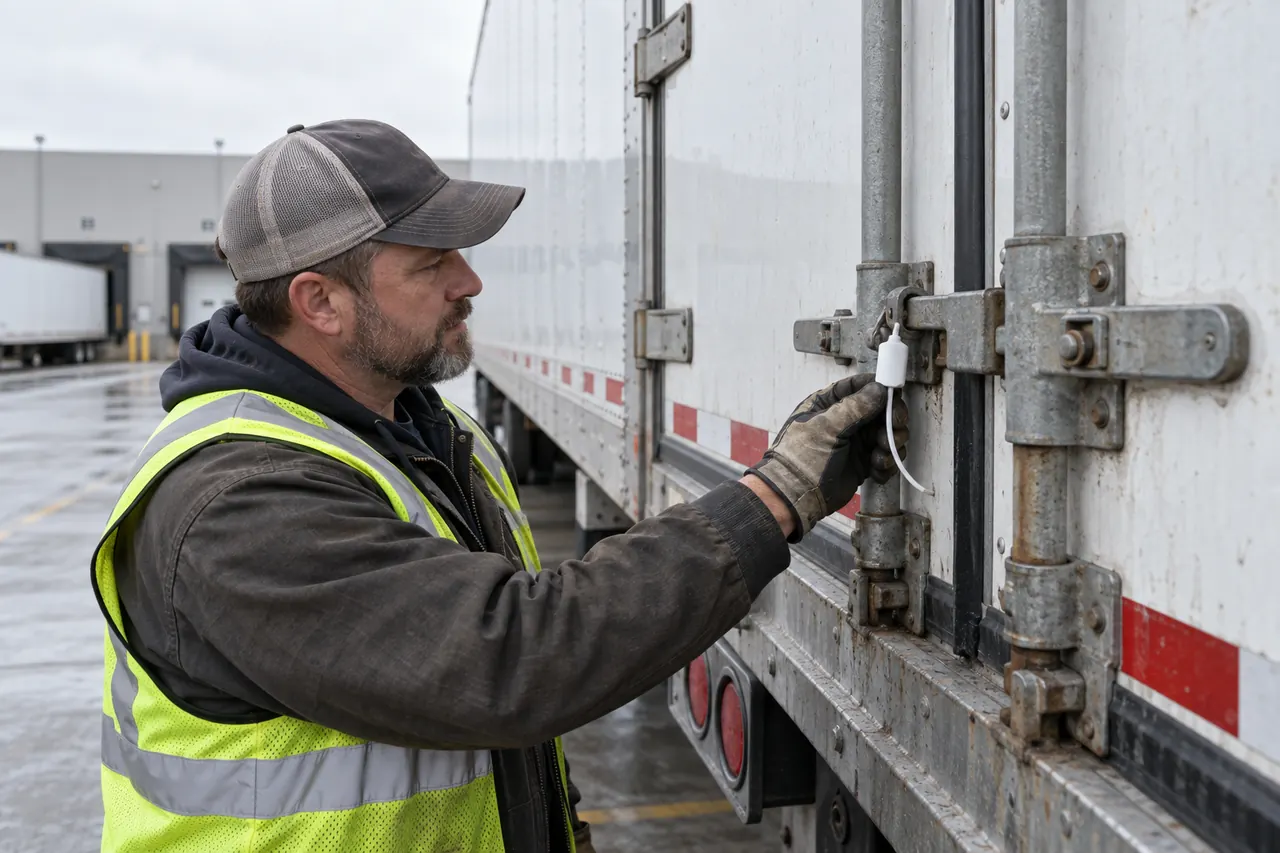
At a stop, close and lock the cab, check the trailer doors, and keep the shipping documents out of sight. Look around the vehicle before pulling away. If a seal, latch, door, or trailer position has changed unexpectedly, do not quietly replace a seal or continue as though nothing happened. Contact dispatch and follow the incident procedure so the condition can be documented.
Protect the Information That Moves the Load
Shipment data is operationally sensitive. A photograph of a bill of lading can reveal where valuable goods will be picked up, the delivery window, and the names of the parties involved. Screenshots of a load board or a dispatch message can carry similar details. Drivers and office staff should use approved apps, strong account protection, and the carrier's normal process for sharing documents.
Be skeptical of a message that creates urgency: “the receiver changed,” “send the pickup code now,” or “log in again to keep the load.” Call a known contact independently before acting. The FBI's IC3 advisory specifically describes compromised accounts and fraudulent postings used to steal loads. The safest verification often takes only a few minutes, but it has to happen before the information or freight is released.
Office procedures matter too. Dispatchers can limit access to load details, use multifactor authentication, and document who approved an address change. If the route or delivery instructions change, update the official record and send the driver one clear, confirmed instruction. Conflicting text messages are a poor chain of custody.

Use a Consistent Handoff Record
A simple timeline helps when a shipment is questioned later. Record when the trailer was accepted, which seal was present, where and when stops occurred, when the receiver opened the doors, and who noted an exception. The purpose is not to create paperwork for its own sake. It is to make an unexplained gap visible while the details are fresh.
At delivery, check that the location and authorized receiver match the confirmed instructions. If a person asks for the trailer at a different door or address, verify the change with dispatch. Keep copies of the signed proof of delivery and any discrepancy report according to carrier policy. Drivers should avoid arguing over fault at the dock; document the facts and let the carrier handle claims and investigation.
For dropped trailers, use an approved yard and follow company policy on kingpin, landing-gear, and door locks. The FBI recommends high-security rear-door locks and other physical controls for unattended loads, but hardware is only one layer. A secured trailer in the wrong yard or released on fraudulent instructions remains vulnerable.
What to Do if Something Looks Wrong
If there is immediate danger, get to safety and call 911. If a load is missing, a seal has been disturbed, or a pickup appears fraudulent, notify dispatch promptly and preserve the relevant messages, documents, seal information, photographs, and location history. Do not confront suspected thieves or chase a vehicle. The carrier can coordinate with the shipper, insurer, and law enforcement while the driver gives a factual account.
The FBI's cargo-theft guidance directs victims to file a local or state police report and provides ways to report information federally. Cyber-enabled schemes can also be reported through IC3. Reporting quickly improves the chance that the shipment, vehicle, records, and communications can be traced.
A Practical Security Routine
Before pickup: verify the load, carrier assignment, destination, trailer, and pickup reference through approved channels. At the dock: compare the bill of lading and seal with the instructions, and resolve any mismatch before departure. On the road: use planned legal stops, keep documents and credentials private, and inspect the doors after each stop. Before delivery: confirm any last-minute change with dispatch through a known contact. After delivery: save the handoff record and report exceptions immediately.
No routine eliminates every theft. But a carrier that verifies identities, controls changes, chooses secure stops, and responds quickly to discrepancies gives criminals fewer easy openings. The most effective defense is a chain of small checks carried out consistently by everyone who touches the load.